Milky Way's Black Hole Spins at a Snail's Pace, Study Finds
Science

Milky Way's Black Hole Spins at a Snail's Pace, Study Finds

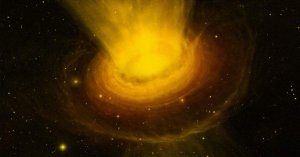
New research published in the Astrophysical Journal Letters reveals that the Milky Way's central black hole spins at a remarkably slow rate—at most 10% of the speed of light. This sluggish spin, inferred from the undisturbed orbits of ancient stars nearby, contrasts sharply with the rapid rotation of other supermassive black holes and explains the galaxy's calm core.

Keir Lane

Compiled by the editorial desk with reference to the study published in the Astrophysical Journal Letters and reporting by Live Science.

New research indicates that the supermassive black hole at the center of the Milky Way is rotating at a surprisingly leisurely pace, a finding that could reshape our understanding of the galaxy's inner workings. The study, published this month in the Astrophysical Journal Letters, reveals that the black hole spins at a maximum of 10% of the speed of light—far slower than the dizzying speeds observed in many of its counterparts.

Most supermassive black holes, which anchor the cores of galaxies, rotate at staggering velocities, dragging nearby matter into their orbital wake. However, the Milky Way's central black hole appears to be an exception. According to a report by Live Science, a team of astronomers from Harvard University and Northwestern University reached this conclusion by studying a cluster of ancient stars that orbit perilously close to the galactic center.

These stars, which are among the oldest in the galaxy, have maintained their original orbital paths over billions of years. If the black hole were spinning rapidly, its gravitational pull would have long since twisted those orbits, scattering the stars into chaotic trajectories. The fact that they remain undisturbed provides a powerful constraint on the black hole's rotation rate.

Why a Slow Spin Matters

The leisurely spin helps explain why the Milky Way's core is relatively quiet compared to other galaxies. Fast-spinning supermassive black holes are known to emit powerful jets of matter and energy as they consume surrounding gas and dust. No such jets have been observed emanating from our galaxy's center, a detail that aligns with the new spin measurement.

While the findings are compelling, the researchers acknowledge that further confirmation is needed. Upcoming efforts to directly image the region around the black hole—such as those using the Event Horizon Telescope—could provide additional evidence to support the slow-spin hypothesis.

The study's implications extend beyond the black hole itself. The stability of the stars' orbits suggests that the inner galaxy has remained relatively undisturbed for eons, offering a unique window into the early history of the Milky Way. Understanding the spin of our galactic center also helps scientists refine models of how supermassive black holes grow and interact with their host galaxies.

For now, the Milky Way's central black hole appears content to take its time, a cosmic anomaly that challenges assumptions about the behavior of these enigmatic objects.

Next Pages
Browse More
Page
01
China Deploys 60,000 Troops to Plant Forests and Cut Smog

China is mobilizing 60,000 soldiers to plant trees across 84,000 square kilometers, aiming to raise forest coverage from 21% to 23% in 2018. The initiative targets heavily polluted Hebei province, but experts caution that trees alone won't solve the smog crisis. This move complements earlier measures like factory closures and a diesel car ban.

Keir Lane · 2026-08-23
Page
02
Remote Frog Call Monitoring Device Lets Researchers Dial Into Wetlands

A new waterproof device called the FrogPhone lets scientists monitor frog calls from up to 150 meters away without repeated site visits. Developed by researchers and published in the British Ecological Society, the tool aims to make ecological surveys more efficient and frequent, supporting conservation efforts.

Keir Lane · 2026-08-23
Page
03
Wormhole Travel May Be Possible, New Black Hole Model Suggests

A new theoretical model suggests that objects, including spacecraft, could survive passage through a black hole's wormhole, challenging traditional views. The research, published in Classical and Quantum Gravity, replaces the central singularity with a finite-sized wormhole, offering a potential path to another universe.

Keir Lane · 2026-08-23
Page
04
New Zealand Sets 2035 Deadline for Fossil-Free Power Grid

New Zealand's new prime minister, Jacinda Ardern, has pledged to make the nation's electricity grid fully renewable by 2035. The country already sources over 80 percent of its power from renewables, but faces challenges in maintaining reliability and affordability without fossil fuel backup. The plan is part of a broader strategy to achieve zero carbon emissions by 2050.

Keir Lane · 2026-08-23
Page
05
Microplastics Found in Every Antarctic Snow Sample, Study Says

A new study reveals microplastics in all 19 snow samples collected in Antarctica, challenging assumptions about the continent's pristine environment. The findings, published in the journal Cryosphere, highlight the global reach of plastic pollution.

Keir Lane · 2026-08-23
Page
06
Seaweed-Eating Microbes Offer New Route to Biodegradable Plastics

Researchers at Tel Aviv University have developed a method to produce biodegradable plastic from seaweed using marine microorganisms, avoiding the need for fertile land and fresh water. This approach could help mitigate ocean plastic pollution and reduce reliance on fossil fuels.

Keir Lane · 2026-08-23
Page
07
Seawater and Sunlight: A New Path to Clean Fuel

Researchers at Osaka University have developed a method using sunlight to convert seawater into hydrogen peroxide, a fuel that can generate electricity. This process offers a safer, more efficient alternative to hydrogen gas production, potentially advancing green energy storage and transport.

Keir Lane · 2026-08-23
Page
08
China's Solar Panel Output Reshapes Global Energy Markets

China now manufactures enough solar panels annually to generate a terawatt of power, a scale that is driving down global electricity costs and challenging fossil fuel dominance. With 64% of worldwide utility-scale renewable construction underway, the country's output is reshaping energy economics.

Keir Lane · 2026-08-23
Page
09
Venice Canal Glows Green After Chemical Leak, Officials Confirm

A stretch of Venice's Grand Canal turned fluorescent green over the weekend, prompting an investigation. Officials confirmed the color came from fluorescein, a non-toxic chemical used in infrastructure testing, though its source remains unclear. Police have not ruled out environmental activism.

Keir Lane · 2026-08-23
Page
10
Flat Universe Theory: Could Life Thrive in Two Dimensions?

A physicist's new paper suggests life could theoretically exist in a two-dimensional universe, challenging long-held assumptions about the necessity of three spatial dimensions for biology and gravity.

Keir Lane · 2026-08-23
Page
11
Frozen 42,000-Year-Old Foal Blood Fuels Extinct Horse Cloning Effort

Researchers in Siberia have extracted liquid blood from a 42,000-year-old foal preserved in permafrost, raising hopes for cloning the extinct Lena horse. The discovery, announced by the Mammoth Museum in Yakutsk, marks one of the best-preserved Ice Age animals ever found. Scientists caution that viable cells are needed for cloning, a process that has failed 20 times before.

Keir Lane · 2026-08-23
Page
12
Mysterious Planet Nine May Explain Sun's Six-Degree Tilt

A Caltech team proposes that the hypothetical Planet Nine, with its massive size and tilted orbit, is responsible for the Sun's six-degree axial tilt, a mystery that has puzzled astronomers for 150 years. The theory, presented at a planetary science meeting, adds to the growing evidence for the planet's existence, though direct observation remains years away.

Keir Lane · 2026-08-23
Page
13
Australian Telescope Confirms Cosmic Origin of Fast Radio Bursts

Researchers at the Australian National University have used the Molonglo telescope to confirm that fast radio bursts originate from space, not terrestrial interference. The finding narrows the search for the source of these millisecond-long energy flashes, which may hold clues to the universe's mechanics.

Keir Lane · 2026-08-23
Page
14
EPA Eases Methane Leak Rules for Oil and Gas Sector

The Environmental Protection Agency has rolled back Obama-era methane leak regulations for the oil and gas industry, reducing the obligation to detect and repair leaks. EPA Administrator Andrew Wheeler says the move cuts redundant paperwork, but critics warn it could worsen climate change.

Keir Lane · 2026-08-23
Page
15
Particle Collisions Reveal Surprising Link to Pure Math Numbers

Physicists at CERN's Large Hadron Collider have found that numbers used to calculate collision outcomes match a class of pure math values called periods. This unexpected overlap with algebraic geometry could streamline complex calculations and deepen our understanding of quantum mechanics.

Keir Lane · 2026-08-23
Page
16
Sanders' Private Jet and 60-Degree Hotel Rooms Revealed in New Book

A new book by The Atlantic's Edward-Isaac Dovere details Senator Bernie Sanders' travel preferences, including 60-degree hotel rooms and a fondness for private jets, contrasting with his climate advocacy. The revelations, based on campaign staff accounts, have sparked questions about his environmental stance.

Keir Lane · 2026-08-23
Page
17
Vaping-Related Lung Injuries: CDC Data Points to Black-Market THC Brands

New CDC data links most EVALI cases to THC vaping products, with Dank Vapes accounting for over half. The agency warns that vitamin E acetate is associated with the illness, but other causes remain under investigation.

Keir Lane · 2026-08-23
Page
18
U.S. Pours $82 Million Into Next-Generation Nuclear Reactor Research

The Department of Energy is distributing $82 million across 93 projects in 28 states to advance innovative nuclear technologies. The funding supports university research, small business startups, and regulatory streamlining through the GAIN initiative, aiming to commercialize next-generation reactors.

Keir Lane · 2026-08-23
Page
19
Remote Work Trend Cuts U.S. Energy Demand by 1.8%, Study Finds

A new study in Joule reveals that Americans spent eight more days at home in 2012 than in 2003, leading to a 1.8% drop in national energy demand. The shift, driven by technology-enabled remote work and online shopping, reduced transportation-related energy use significantly.

Keir Lane · 2026-08-23
Page
20
Global Carbon Output Set to Rise in 2017, New Data Shows

New data from the Global Carbon Project projects a 2% rise in fossil fuel emissions for 2017, ending a three-year plateau. The findings, released ahead of COP23, challenge hopes that emissions had peaked and underscore the urgency for stronger climate action.

Keir Lane · 2026-08-23