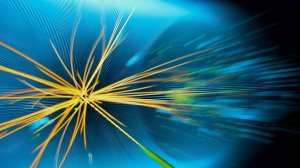
At the Large Hadron Collider in Geneva, where particle beams collide at near-light speed, researchers have stumbled upon a mathematical echo: the numbers emerging from their collision calculations are identical to a class of values long studied in pure mathematics. This convergence, noted by mathematicians and physicists alike, suggests a deeper structural link between the subatomic world and algebraic geometry.
Each collision experiment at the LHC generates gigabytes of data, and physicists rely on Feynman diagrams to make sense of it all. These simple line drawings represent particles and their interactions, from initial paths to final outputs. By assigning mass, momentum, and direction to each line, physicists can compute a Feynman probability—the likelihood that a particular collision outcome will occur.
But during these calculations, a curious pattern emerged. The numerical results from the diagrams were the same as a set of numbers known in mathematics as periods. These values are central to the study of motives, which serve as the fundamental building blocks of polynomial functions. A period, such as pi, appears in integrals that define both a circle and a sphere, allowing mathematicians to recognize that the motives for these shapes are identical.
In particle physics, determining the probability of a specific outcome involves integrating each possible Feynman diagram scenario and summing those integrals to find the amplitude. Squaring that amplitude yields the probability. The challenge intensifies with complex collisions that involve loops—instances where particles emit and reabsorb other particles mid-collision. More loops make the amplitude calculations significantly harder, though they also increase the diagram's predictive accuracy.
Why the Overlap Matters
If the connection between periods and Feynman diagrams holds, it could offer a shortcut for physicists. Instead of performing thousands of individual calculations, they might infer the amplitude directly from the diagram's structure. That would simplify the design and execution of particle physics experiments, providing clearer insights into the quantum realm.
Such advances could eventually accelerate the development of quantum computers, which hold potential for fields as varied as engineering, gene processing, and machine learning. While the immediate impact is on theoretical physics, the ripple effects could extend far beyond the lab.
For now, the discovery remains a mathematical curiosity with profound implications. As researchers continue to probe the boundaries between physics and pure math, the numbers from the LHC may hold keys to a more unified understanding of the universe.