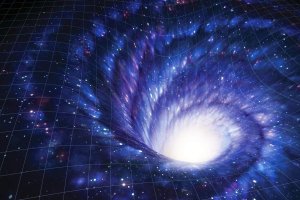
For decades, black holes have been portrayed as cosmic dead ends, where gravity crushes matter into oblivion. But a new theoretical study offers a different perspective: what if the heart of a black hole is not a point of infinite density, but a passage to elsewhere? Physicists from the University of Lisbon have modeled the journey of a chair, a scientist, and a spacecraft into a black hole's core, suggesting that with the right conditions, these objects could emerge intact on the other side.
The research, published in the journal Classical and Quantum Gravity, challenges a cornerstone of Einstein's general relativity—the existence of a singularity at the center of a black hole. This is the point where gravity becomes infinitely strong, and our current laws of physics break down. The team, led by Diego Rubiera-Garcia, decided to test what happens if that assumption is dropped.
"What we did was to reconsider a fundamental question on the relation between the gravity and the underlying structure of space-time," Rubiera-Garcia explained. "In practical terms, we dropped one assumption that holds in general relativity, but there is no a priori reason for it to hold in extensions of this theory."
In place of a singularity, the researchers propose a finite-sized wormhole. This isn't entirely new—earlier this year, physicists from the University of Cambridge argued that singularities might not be hidden behind event horizons, suggesting the possibility of 'naked' singularities in higher-dimensional universes. If such structures exist, general relativity would need revision, a prospect that physicist Saran Tunyasuvunakool from Cambridge described as potentially "throw everything upside down."
How an Object Could Survive
The key to survival, according to the Lisbon team, lies in the interactions between the particles that make up an object. They modeled observers as collections of points held together by physical or chemical forces, each following a geodesic—the path a free-falling object takes in spacetime. While each particle experiences a slightly different gravitational pull, the internal forces could compensate, keeping the object from being torn apart.
To test this, the researchers calculated the time a light ray would take to travel between two parts of the body. They found that this time remains finite, meaning the internal connections could hold. "Thus, different parts of the body will still establish physical or chemical interactions and, consequently, cause and effect still apply all the way across the throat of the wormhole," they wrote.
If the wormhole has a finite radius, the crushing force on an object would be limited to that size, not infinite. So while the object would be compressed, it would not be destroyed—a far cry from the 'spaghettification' predicted by standard black hole models.
The team's playful comment in an opinion piece underscores their stance: "For a theoretical physicist, the suffering of observers is admissible (one might even consider it part of an experimentalist's job) but their total destruction is not."
This work aligns with Stephen Hawking's 2015 assertion that "black holes ain't as black as they are painted," suggesting they are not eternal prisons but potential exits. However, all of this remains theoretical, as direct observation of a black hole's interior is still beyond our reach.
For now, the idea that a spacecraft could traverse a wormhole and emerge in another universe is a tantalizing possibility, one that pushes the boundaries of our understanding of gravity and spacetime.