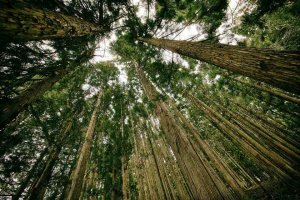
In a large-scale environmental push, China is dispatching 60,000 soldiers to plant trees across 84,000 square kilometers (32,400 square miles) of land, aiming to expand its forest cover and curb chronic air pollution. The effort, reported by Asia Times, is part of a broader strategy that includes shutting down factories and banning diesel cars.
The troops, drawn from the People's Liberation Army and the armed police force, have been reassigned from their posts along the northern border to take on the reforestation mission. Their primary target is Hebei province, a region surrounding Beijing that is notorious for heavy industrial emissions and frequent smog episodes.
China currently has about 208 million hectares of forested land, covering roughly 21 percent of its territory. The government's goal for 2018 is to raise that figure to 23 percent, according to official statements. Zhang Jianlong, head of the State Forestry Administration, told The Independent that forest coverage could eventually reach 26 percent within two decades.
Hebei province has pledged to boost its own forest coverage to 35 percent by 2020, a move that could help mitigate the region's contribution to the country's smog problem. However, environmental experts remain skeptical about the impact of trees alone. Even with an additional two percentage points of forest cover, China's air quality may not improve dramatically, especially given the scale of its industrial output.
Why Trees Are Not a Silver Bullet
The reforestation campaign is only one element of China's multi-pronged approach to pollution. In 2017, the government ordered the closure of 40 percent of its factories and announced plans to phase out diesel-powered vehicles. The country also inaugurated the world's largest smog tower in 2018, which reportedly reduces local air pollution by 15 percent.
These measures, combined with the new tree-planting initiative, reflect a growing recognition of the health risks associated with air pollution. But analysts note that without deeper cuts in emissions from coal-fired power plants and heavy industry, the impact of forests on air quality will remain limited.
The deployment of military personnel for environmental projects is not unprecedented in China, but the scale of this operation underscores the urgency Beijing places on improving air quality. As the country continues to urbanize and industrialize, the challenge of balancing economic growth with environmental protection persists.
While the long-term benefits of reforestation—such as carbon sequestration and soil conservation—are well established, the immediate effect on smog is uncertain. For now, China's tree-planting campaign is a visible symbol of its commitment, but it is likely to require sustained policy efforts to achieve meaningful change.