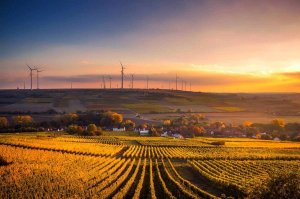
Germany achieved a new national milestone on April 30, when renewable sources supplied 85 percent of the country's electricity demand. The figure, which includes wind, solar, and hydroelectric generation, marks the highest share of clean power ever recorded in Europe's largest economy.
According to Patrick Graichen of the Agora Energiewende initiative, most coal-fired power stations were not operating that Sunday. The achievement reflects a broader trend: as renewable capacity expands, fossil fuel plants are increasingly pushed out of the market during periods of high wind and sun.
Germany has long positioned itself as a frontrunner in the global energy transition. The country's Energiewende policy, which began in the early 2000s, aims to phase out nuclear power and drastically cut greenhouse gas emissions. By 2030, the government plans to ban new combustion-engine cars, and by 2050, it intends to reduce carbon emissions to just 20 percent of 1990 levels. These targets have drawn international attention, with National Geographic describing Germany as a leader among large industrial nations in the shift away from fossil fuels.
Why the Record Matters
The April 30 record is more than a symbolic achievement. It demonstrates that high renewable penetration is technically feasible without compromising grid stability. Graichen predicted that days like this will become "completely normal" by 2030, suggesting that the country's clean energy infrastructure is scaling up faster than many anticipated.
However, the milestone also highlights the challenges ahead. Renewable generation is intermittent, and Germany still relies on coal and natural gas for backup power. The country's coal phase-out, which is scheduled to be completed by 2038, remains a contentious political issue, with environmental groups pushing for an earlier deadline.
Germany is not alone in this transition. In 2015, Canada met 66 percent of its energy needs from renewable sources. Spain, Costa Rica, and the United Arab Emirates have also made significant investments in clean energy. Across Europe, 90 percent of new power capacity added in 2016 came from renewables, according to industry data. Even some of the world's poorest nations have committed to shifting away from fossil fuels, reflecting a global momentum that extends beyond wealthy countries.
The record comes at a time when climate-related records are often grim. Global temperatures, sea levels, and carbon dioxide concentrations have repeatedly hit new highs in recent years. Germany's achievement offers a counterpoint, showing that policy and investment can produce measurable results.
Still, experts caution that one day's success does not guarantee a smooth path forward. The country must continue to expand its grid, improve storage capacity, and integrate renewable sources into its energy mix. The April 30 record, while noteworthy, is part of a longer journey that will require sustained effort.
For now, the milestone serves as evidence that a major industrial economy can operate on a predominantly renewable basis, even if only for a single day. Whether such days become the norm by 2030, as Graichen suggests, will depend on the pace of policy implementation and technological innovation.