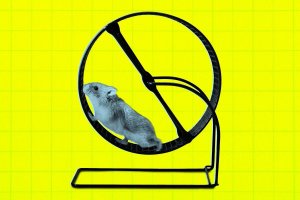
In a world where algorithms increasingly steer our choices, one San Francisco programmer took the concept to its extreme: he built an app to randomly decide his life, from where he traveled to what tattoos he got. Max, a former Google employee, described his existence as eerily robotic, prompting a radical experiment in surrendering control to a randomizer—a story recently chronicled in The Atlantic.
Max's journey began with a mundane realization during a night out with friends. "The new hip bar is exactly where a computer would expect me to go," he recalled, noting how apps and platforms had funneled him into perfectly optimized, yet predictable, routines. Instead of breaking free from technology, he embraced it, creating an app that summoned an Uber to a surprise destination known only to the driver.
The results were what The Atlantic called "uncertainty exposure therapy." Max visited a leather bar, a planetarium, and a bowling alley across town—places he'd never discovered on his own. Soon, he was randomizing meals, music, and even tattoos, finding a strange liberation in the chaos. "In choosing randomly, I found freedom," he told the magazine.
In 2015, Max quit his cushy job at Google and surrendered his life to another algorithm designed to select his global residence. For over two years, he moved roughly every month, hopping from Ho Chi Minh City to Berlin. His commitment to the experiment was undeniable, but it raised a critical question: Was this true freedom or just a different kind of cage?
Michel Dugas, a psychology professor at the Université du Québec, offered a skeptical view. He told The Atlantic that random decision-making can be a way to avoid responsibility rather than genuinely embrace uncertainty. Max's experiment seemed to work—until it led him to a rural town in North Carolina's swamps, Williamston, during a cross-country road trip with his future wife. "What are we even doing here?" he asked himself, hitting a moment of clarity.
"When you live randomly, you create lots of noise, but that noise doesn't really move in any particular direction," Max reflected. "I realized I was seeing all this newness but wasn't building toward anything."
Today, Max is settled with his wife and plans to start a family, though he still enjoys small doses of randomness, like randomizing his menu orders. The Atlantic reporter who dined with him at a randomized restaurant found him "genuinely passionate about getting outside his bubble," not performative. Max's philosophy: "When you have a fixed plan, a fixed identity, a fixed routine, it's easy to become trapped in a prison of your preferences."
Why This Matters in an Age of AI
Max's story is a case study in the human desire to break free from algorithmic determinism, but it also highlights a growing concern. As AI models become more powerful, they are increasingly used for recommendations—from music and movies to travel plans and advice. The danger, experts suggest, is that these systems keep us comfortably within our preferences, never challenging us to venture into the unknown. Max's extreme experiment, while perhaps overboard, offers a provocative counterpoint to a future where algorithms might run even more of our lives.